Everybody Saw It, Nobody Remembered It: What Visibility Without Resonance Actually Costs You
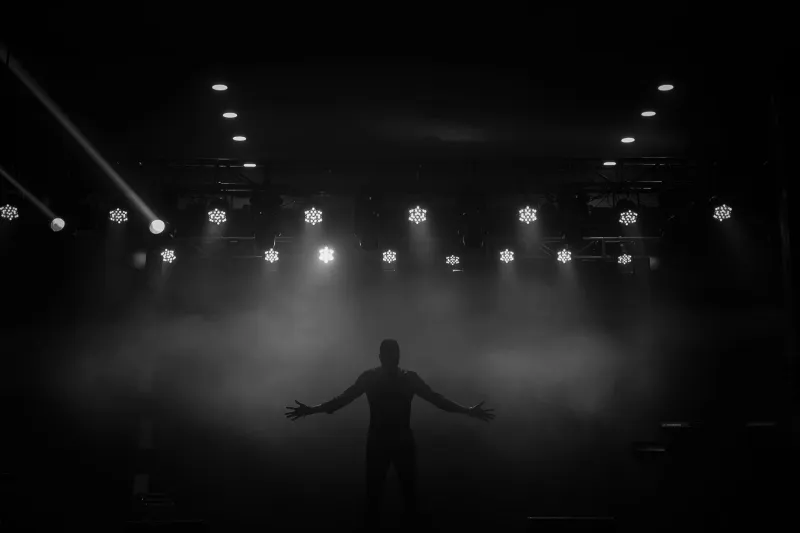
A few years back, a clip of me performing circulated pretty widely online. Not millions of views, but enough that my phone buzzed for a couple of days straight and my follower count nudged upward in a way that felt exciting. People I hadn't spoken to in years were suddenly sliding into my DMs. For about a week, I felt like I was arriving somewhere.
Then it stopped. And almost nothing changed.
No new bookings. No meaningful creative connections. No one in my professional circle brought it up six months later. The clip had gotten seen — but it hadn't landed anywhere that mattered. And that distinction, the space between being seen and being remembered, has quietly shaped every creative decision I've made since.
Attention Is the Appetizer. Resonance Is the Meal.
We live in a culture that has basically collapsed the difference between visibility and impact. The metrics we use — views, likes, shares, follower counts — are all measures of exposure, not meaning. They tell you how many eyeballs landed on your work for a moment. They tell you almost nothing about whether anything stuck.
In entertainment, this matters more than in almost any other field. Because the goal was never just to be seen. It was to make someone feel something they couldn't quite shake afterward. It was to be the performance they described to a friend over dinner. The story that made them pull over their car because they were laughing too hard, or crying too hard, to drive safely.
Visibility is the door. Resonance is what happens after someone walks through it. And a lot of us — myself included, at various points — have spent enormous energy decorating the door while barely thinking about the room on the other side.
The Viral Trap No One Warns You About
Here's the uncomfortable thing about a viral moment: it can actually distort your creative compass if you're not careful. You start reverse-engineering the thing that worked. You start optimizing for the conditions that generated the spike, rather than asking what genuinely moved people and why.
I've watched talented performers chase a version of their most-shared moment for years, slowly sanding down the rough edges that made it interesting in the first place. The irony is brutal — the thing that got shared was usually specific, a little weird, deeply personal. And the pursuit of repeating it produces something generic.
Meaningful work almost never arrives looking like it was designed to travel. It arrives looking like the artist had something they needed to say, and the audience happened to need to hear it at exactly the same time.
What Memorable Actually Looks Like
Think about the performances, stories, or creative moments that have genuinely stayed with you. Not the ones you clicked on because the thumbnail was clever. The ones that rearranged something inside you, even slightly.
Chances are, they had a few things in common. They were specific rather than broad. The performer wasn't trying to appeal to everyone — they were committed to one particular truth, one real emotional note, and they hit it without flinching. There was a sense that something was at stake for the artist, not just for the audience.
Specificity is the engine of resonance. The more precisely you name a feeling, a moment, a character's interior world, the more universally it lands. It sounds backward, but it's one of the most reliable truths in storytelling: the hyper-specific detail is almost always what makes an audience lean in and whisper yes, exactly that.
The Psychological Shift That Changes Everything
Chasing visibility puts you in a reactive posture. You're constantly scanning the environment — what's trending, what the algorithm rewards, what other people seem to be responding to. You're orienting yourself outward, toward the audience's behavior, rather than inward, toward the work itself.
Building for resonance requires a different internal posture entirely. It asks you to start from a place of genuine conviction: What do I actually believe about this story? What does this character need that I understand in my bones? What truth am I willing to stand behind even if it doesn't perform well?
That shift is harder than it sounds, especially when the numbers are visible and the feelings are not. But it's also the shift that separates a career with staying power from a moment in the feed.
The Long Game Nobody Talks About
Here's what I've noticed about the artists whose work I keep coming back to, years after the initial encounter: they weren't necessarily the most present in terms of output or promotion. They weren't always the ones with the biggest platforms or the most aggressive content calendars. But when they showed up, they were fully there, and the work carried weight.
Meaningful performances outlast viral moments by a significant margin. Not because they were louder, but because they were truer. They gave the audience something to return to — a line, an image, a feeling — that kept giving.
That's the real currency of a creative career, not the spike, but the slow accumulation of work that people genuinely carry with them. The kind of work that someone references in a conversation two years later, unprompted, because it still means something to them.
So What Do You Actually Do With This?
I'm not saying stop promoting your work or ignore the platforms that exist. That would be naive, and honestly, a little precious. Visibility still matters — you can't resonate with an audience that never finds you.
But I am saying: don't let the pursuit of visibility lead the creative decisions. Let the work lead. Let the truth of what you're trying to express come first, and then figure out how to put it in front of people. That ordering matters more than most of us admit.
Ask yourself, honestly, whether the last thing you created was designed to be shared or designed to be felt. Those aren't always mutually exclusive, but they're also not the same question. And which one you answer first will shape everything that follows.
Being seen is a starting point. Being remembered is the whole point. Don't let the metrics convince you otherwise.