Nobody Remembers the Outfit: Why Emotional Impact Is the Only Thing That Sticks

The Night I Wore the Wrong Dress and Nobody Cared
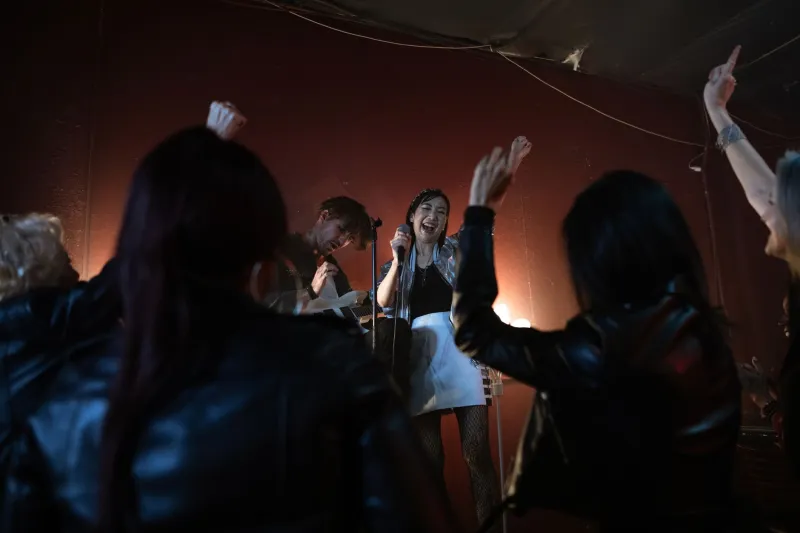
A few years back, I showed up to a showcase in what I was convinced was the wrong outfit. I'd grabbed the backup dress — the one I hadn't planned on, the one that didn't photograph well, the one that wasn't the look. I spent the first ten minutes backstage in a low-grade panic, convinced the whole night was compromised before it started.
You know what people talked about afterward? Not the dress. Not my hair. Not the lighting that kept flickering in the second act. They talked about a specific moment — a beat in a story I told where I paused just long enough for the room to hold its breath. That pause wasn't planned. It happened because I got genuinely choked up, and instead of pushing through, I just... stayed there for a second.
That moment lived in people. The outfit did not.
I think about that night a lot when I watch creators tie themselves in knots over aesthetics — the thumbnail, the color palette, the filter, the brand consistency. And look, none of that stuff is bad. Presentation matters. But we've gotten so tangled up in being seen that we've forgotten what it actually means to be heard.
The Visibility Trap
Here's the paradox nobody talks about enough: the most visible creators aren't always the most impactful ones. We live in an attention economy that rewards the loud, the bright, the algorithmically optimized. And that's pulled a lot of talented people into a game where the goal becomes eyeballs, not connection.
But think about the last piece of content — a show, a video, a podcast, a live performance — that genuinely moved you. Did you walk away thinking about how polished it was? Or did you walk away with something lodged in your chest that you couldn't quite name?
Emotional residue. That's the real currency. And it doesn't come from looking perfect. It comes from being truthful in a way that resonates with something the audience already carries inside them.
Neuroscience actually backs this up. Research on memory consistently shows that emotion is the primary driver of what we retain. We don't remember information as much as we remember how information made us feel. Which means if your audience leaves your performance thinking wow, she was so polished, you've kind of missed it. If they leave thinking I've never heard anyone say that out loud before — that's when you've done something real.
What Unforgettable Actually Looks Like
I want to talk about Brené Brown for a second, because she's one of the best modern examples of this principle in action. She's not performing in the traditional entertainment sense, but she is a storyteller and a public presence — and what made her famous wasn't a perfectly produced TED Talk. It was the moment she admitted she had a breakdown. A breakdown. On stage. In front of strangers.
That vulnerability cracked something open in millions of people. Not because it was aesthetically perfect, but because it was emotionally true.
Or think about the performers you've watched who stopped you mid-scroll. I'd bet most of them weren't the slickest in the feed. They were the ones who looked directly into the camera like they were talking specifically to you. The ones who said something that felt almost uncomfortably personal. The ones who didn't seem to be managing their image — they seemed to be sharing something they actually needed to say.
That's the difference between being seen and being heard. Being seen is transactional — someone's eyes pass over you. Being heard is relational — someone receives you, and something shifts.
Finding Your Emotional Voice (Without Manufacturing It)
This is where it gets tricky, because the moment you try to engineer emotional resonance, it collapses. Audiences have finely tuned radar for performance-of-authenticity versus actual authenticity. You can't fake the thing that makes people feel seen.
What you can do is get clearer on what you genuinely care about, what actually moves you, what stories you carry that feel almost too personal to tell. Those are almost always the ones worth telling.
A few things I've found useful:
Audit your own emotional responses. What are the moments in your own work — past performances, past pieces, past conversations — where something cracked open unexpectedly? Where you felt it and the audience felt it simultaneously? Those moments are data. They're pointing you toward your authentic register.
Stop smoothing the rough edges. The instinct to clean everything up, to make the story neater and more presentable, is usually the instinct that kills the feeling. Real stories are jagged. They don't resolve cleanly. Let them be a little messy.
Practice sitting in discomfort onstage. That moment I mentioned earlier — the pause where I got choked up — only worked because I didn't immediately rush to fill the silence. Emotional truth needs space. If you're constantly managing the audience's comfort (and your own), you're not giving the feeling room to land.
Ask yourself what you want people to carry out the door. Not what you want them to think about you. Not what you want them to post about. What do you want them to feel on the drive home? Work backward from that.
The Competitive Advantage You're Probably Ignoring
Here's the thing about an oversaturated market: everyone is trying to out-produce each other. Better cameras, better editing, better branding. And that means the one thing that's actually scarce right now is emotional honesty. Raw, specific, human truth.
That's your competitive advantage — if you're willing to use it.
The creators and performers who are going to matter five years from now aren't the ones with the most followers today. They're the ones who figured out how to make their audience feel genuinely understood. The ones who told the stories that were a little scary to tell. The ones who stopped worrying about the dress and stayed present long enough to let the real moment happen.
You don't have to be the loudest in the room. You just have to be the most honest.
And trust me — nobody's going to remember the outfit.