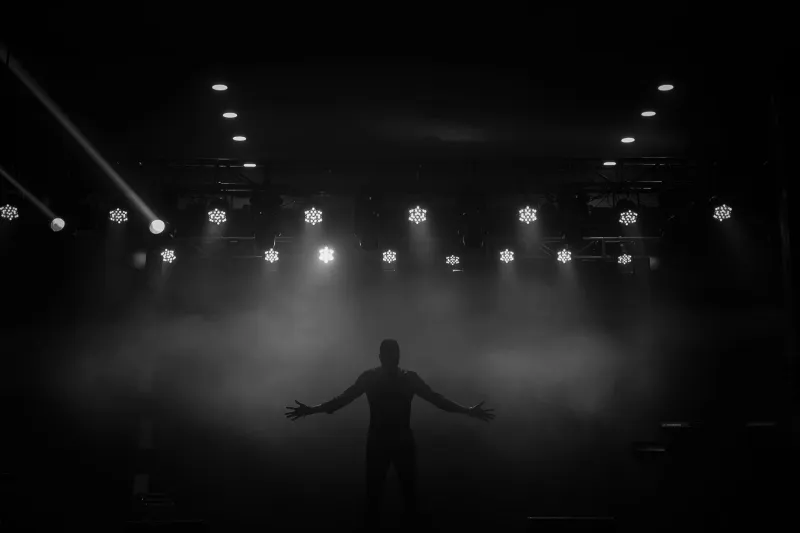
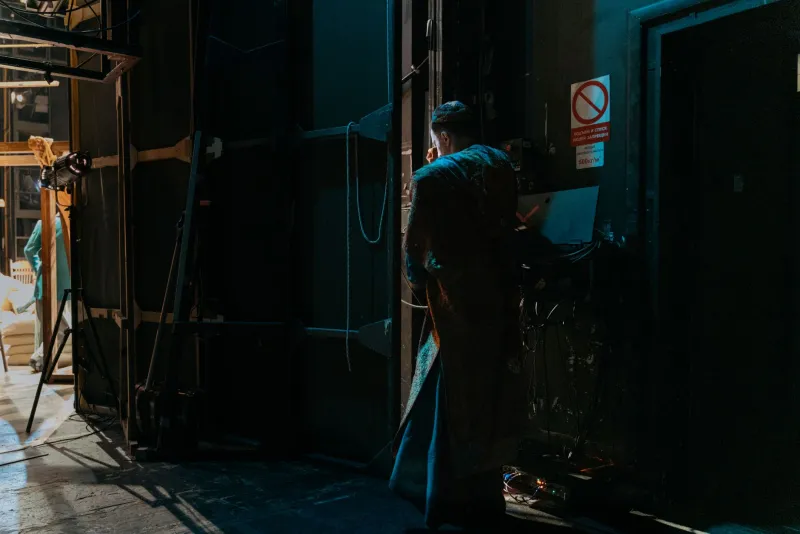
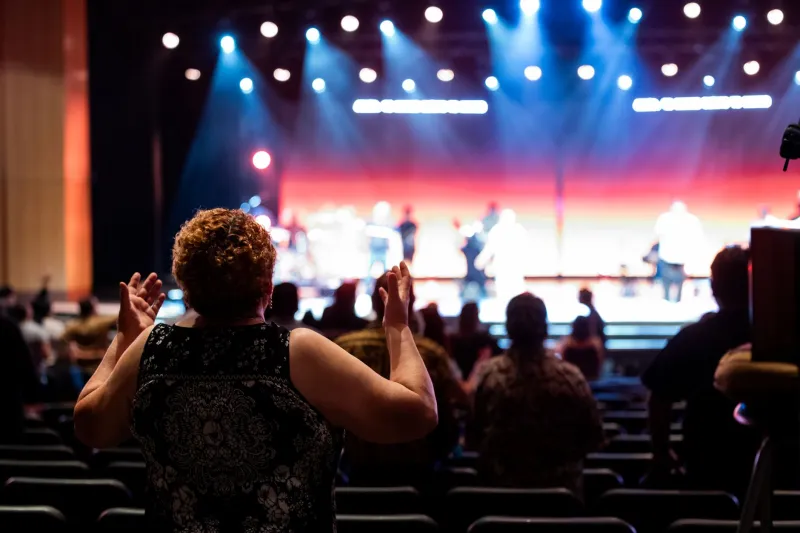
Not the Star? Good. Here's Why That Seat Has the Best Sightlines
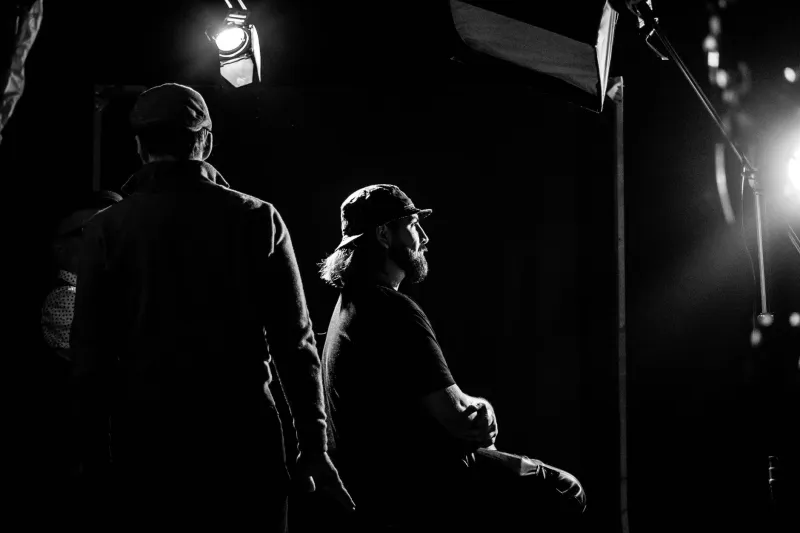
Let me tell you about the year I spent being everyone's backup plan.
I wasn't billed first. I wasn't the one people drove across town to see. I was the person they called when someone else got sick, or double-booked, or simply decided they had a better offer. For a long time, I treated that reality like a wound I needed to hide — something embarrassing to paper over in conversation and power through in private.
Then something shifted. Not all at once, and not because of some tidy epiphany. It shifted because I finally stopped being so consumed by what I wasn't getting and started paying attention to what I actually had.
What I had, it turned out, was a view nobody else in the room was bothering to take.
The Invisible Education Hiding in Plain Sight
Here's what happens when you're not the lead: you watch. You watch constantly. You watch the person who got the part you wanted and you study every choice they make — what lands, what doesn't, where the audience leans in, where they drift. You're not managing your own nerves or protecting your own performance. You're just observing, and observation is one of the most underrated skills in any creative field.
Actors talk about this. Athletes talk about this. The players who come off the bench having watched two full quarters often see the game more clearly than anyone who's been in it since the opening whistle. There's a cognitive clarity that comes from not being in the center of the storm.
When I was understudying, I learned more about timing, pacing, and audience psychology than I had in years of being front and center. I could afford to be a student because nobody was grading me in real time. That's not a consolation prize. That's a scholarship.
The Freedom Nobody Talks About
There's a particular kind of pressure that comes with being The One. Every choice gets scrutinized. Every stumble gets documented. The person at the top of the call sheet carries the weight of everyone's expectations — the director's, the audience's, the industry's, their own.
When you're not that person, you get to experiment in ways they simply can't afford to.
I've taken creative risks in supporting roles that would have been career-altering gambles in a lead. I've tried different vocal approaches, played with subtext, made unexpected choices in small moments — and because the spotlight wasn't trained directly on me, those experiments didn't carry the same stakes. Some of them failed quietly. Some of them worked brilliantly. All of them taught me something I couldn't have learned any other way.
The freedom to fail without fanfare is genuinely rare in entertainment. If you're in a position where you have access to it, use it. Don't waste it sulking about the billing.
What the Second Chair Actually Sees
Orchestra musicians will tell you that the second chair position in any section gives you a specific kind of musical awareness. You're listening differently than the first chair player is. You're tracking the ensemble in a way that actually makes you more attuned to the whole piece, not just your own part.
The same dynamic plays out in every corner of entertainment.
When you're not the obvious choice, you start developing a kind of peripheral intelligence. You notice the dynamics in the room — who has real influence versus who just has a loud voice, which decisions get made before the meeting officially starts, what the person running the room actually responds to versus what they say they respond to. You're gathering data that the person everyone's watching doesn't have time to collect.
That intelligence compounds. Over time, it becomes one of your most valuable professional assets — not because it's strategic in some cold, calculating way, but because it makes you genuinely better at reading people, reading rooms, and reading moments. And in entertainment, that's almost everything.
The Chip That Doesn't Have to Be a Burden
I'm not going to romanticize being overlooked. It hurts. Sometimes it's unfair. Sometimes it's the result of bias, bad timing, or someone making a decision based on factors that have nothing to do with your talent. You're allowed to feel that.
But there's a difference between acknowledging the sting and letting it become the whole story you tell yourself.
The entertainers I most admire — the ones who've built careers with real longevity and real depth — almost universally have a chapter that looks like mine. A stretch where they were waiting in the wings, watching, learning, quietly getting sharper. They didn't skip that chapter. They used it.
The chip on your shoulder only weighs you down if you're carrying it wrong. Worn differently, it's fuel.
How to Actually Leverage the Position
If you're in a secondary role right now — whether that's as an understudy, a supporting cast member, someone who keeps getting passed over for the projects they actually want — here's what I'd tell you from the other side of it:
Pay attention on purpose. Don't just passively observe. Ask yourself specific questions while you're watching. What is this person doing in the first thirty seconds that I'm not doing? Where does the energy shift? What choice would I have made differently, and why?
Treat every small opportunity like it's the main event. The callback you get because someone else dropped out? Prepare for it like you booked it outright. The five-minute slot you were offered when you wanted twenty? Bring your absolute best work to those five minutes. Consistency in small moments is what gets you noticed for big ones.
Build relationships, not just a resume. When you're not the lead, you have more bandwidth for the people around you. Use it. The connections you make when you're not performing for anyone's approval tend to be the most genuine — and the most durable.
Document your own growth. Keep notes. Keep recordings if you can. The progress you make during a stretch when nobody's watching is often the most significant progress of your career, and it's easy to forget it happened once the spotlight finally does find you.
The View From Here
I'm not in the backup position anymore — not in the way I was then. But I carry that time with me, and I'm genuinely grateful for it in a way I couldn't have predicted when I was living it.
The best view in the room isn't always the one from center stage. Sometimes it's the one from the side, where you can see everything — the audience, the performance, the mechanics, the magic — all at once.
If that's where you're standing right now, look around. Really look. Because what you're seeing from that spot? Not everyone gets to see it.