The Stories You're Most Afraid to Tell Are the Ones That Will Define Your Career
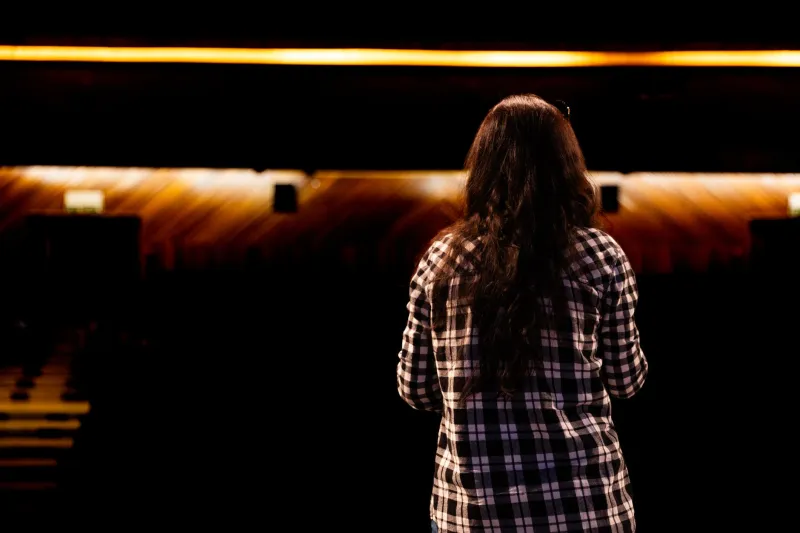
There's a story I told for the first time at a small storytelling event in Chicago about five years ago. It was about a professional failure so spectacular, so completely of my own making, that I had spent two years actively avoiding thinking about it. I had told exactly zero people the full version. Not my closest friends. Not my therapist. Nobody.
I told it to a room of strangers instead.
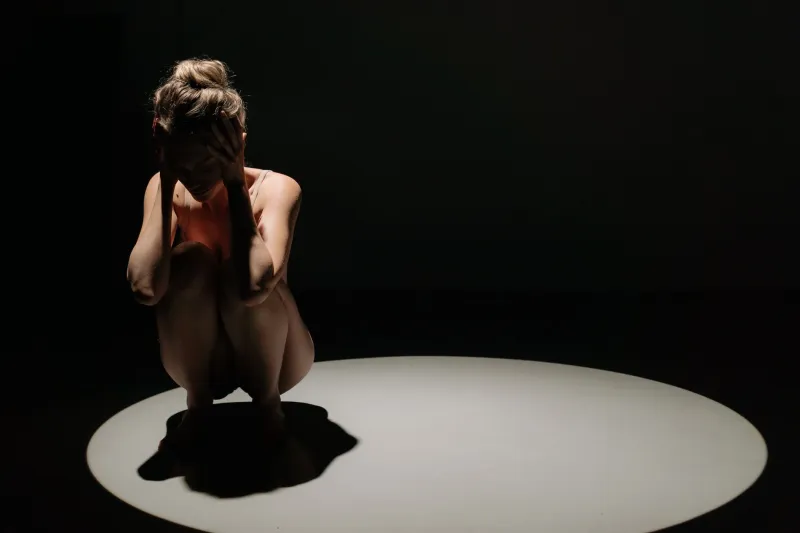
I don't fully understand why I did it. Some combination of deadline pressure, a glass of wine, and the particular bravery that descends on you when you're about to walk onstage and you've run out of other options. But I told it. All of it. The embarrassing parts, the parts where I made the worst possible choice, the part where I cried in a parking garage for forty-five minutes.
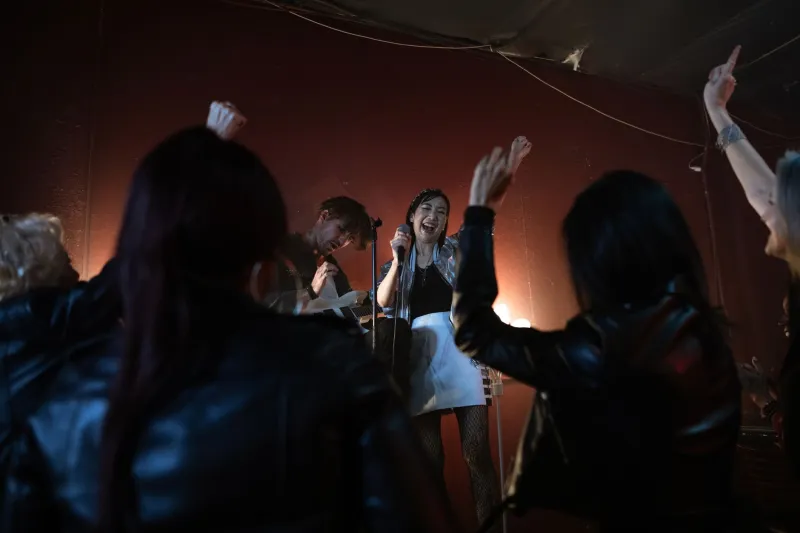
The response in that room was unlike anything I'd experienced before. Not polite applause. Something different — this collective exhale, like I'd said out loud something a lot of people had been holding privately for a long time.
That's the vulnerability paradox. The things that feel most dangerous to share are often the most generous things you can offer.
Why We Protect Our Worst Moments
It makes complete sense that we guard our failures and embarrassments. We live in a culture that performs confidence constantly — on social media, in professional settings, in the careful highlight reels we curate for even our closest relationships. Admitting that you fell apart, made a terrible call, or spent a significant portion of your adult life getting something fundamentally wrong feels like handing someone a weapon.
And in some contexts, it is. I'm not going to pretend vulnerability is universally safe or that every room deserves your most tender material. That's not the argument I'm making.
But in the context of storytelling — real, intentional, craft-driven storytelling — that protective instinct is working against you. Because the stories we've scrubbed clean of shame and uncertainty aren't the ones that land. They're the ones audiences politely applaud and then immediately forget.
The Technical Side of Mining Difficult Material
There's a skill set here that doesn't get talked about enough, because we tend to frame vulnerability in purely emotional terms. We talk about courage and openness and "being real." All of that matters. But there's also a craft component, and if you skip it, you end up with something that feels less like brave storytelling and more like a therapy session the audience didn't consent to.
Here's how I think about it:
Find the universal in the specific. Your particular humiliation is yours. The feeling of humiliation — that hot, sinking sensation of watching yourself make a mistake in slow motion — is everyone's. When you tell a story rooted in your specific experience but oriented toward a universal emotional truth, you create a bridge. The audience walks across it and finds themselves on the other side.
Create narrative distance. You need time and perspective between you and the experience before it becomes material. This isn't a hard rule — some of the most powerful storytelling is raw and recent — but in general, if you're still actively bleeding from something, it's probably not ready to be a performance piece. The processing has to happen first, at least partially. Your job onstage isn't to process in real time; it's to take the audience through a journey you've already mapped.
Know your endpoint before you start. Every story needs a destination — not necessarily a tidy resolution, but a landing place. What changed? What did you learn, or fail to learn? What does this experience mean, even if the meaning is "I still don't entirely know"? That endpoint is what transforms a confessional into a story.
The Line Between Brave and Exploitative
This is the question I get asked most often when I talk about vulnerability in storytelling: How do you know when you've gone too far?
My honest answer is that it's less about content and more about intention and craft. The same story can feel brave in one telling and exploitative in another depending on what you're doing with it.
Exploitative storytelling uses vulnerability as a transaction — look how much I'm sharing, now give me your sympathy, your applause, your validation. It's extractive. It puts the audience in an uncomfortable position where they feel obligated to respond in a particular way.
Brave storytelling offers vulnerability as a gift. It says: I'm going to show you something true about human experience, using my own life as the material. The audience isn't obligated to anything. They're invited.
The practical difference often comes down to specificity and craft. Are you telling the story well? Are you serving the story or are you serving your need to be witnessed? Those are different things, and audiences feel the distinction even when they can't articulate it.
Also — and this matters — are you protecting the people who appear in your story? Using your own worst moments as material is fair game. Using other people's worst moments without their knowledge or consent is a different thing entirely. Draw that line carefully.
A Framework for Opening the Drawer
If you've got a story you've been sitting on — something that feels too big or too risky or too much — here's how I'd suggest approaching it:
First, write it privately. All of it, no audience in mind, no performance considerations. Just get the raw material out where you can see it.
Then ask yourself: What is this story actually about? Not the events — the meaning. The thing underneath. That's your real subject.
Next, identify the moment of change. Every good story has one — a point where something shifts, where the narrator (you) understands something differently than they did at the start. Find yours.
Finally, figure out what you're willing to own completely. The most powerful vulnerable storytelling doesn't hedge. It doesn't say "I sort of made a mistake" or "things were kind of hard." It says: This is what I did. This is what it cost me. This is what I carry. That level of ownership is what makes an audience trust you.
What's Waiting on the Other Side
The story I told in Chicago changed the trajectory of my work. Not because it went viral or because some industry person was in the room. Because it taught me something I couldn't have learned any other way: the stories I was most afraid to tell were the ones that made people feel less alone.
That's the whole point, isn't it? That's why we do this. Not to perform our highlight reel. Not to be admired. But to create a moment where someone in the audience thinks, oh, me too — and feels, even briefly, like the messy, complicated truth of their life is something they don't have to carry alone.
Your worst moments can do that. Your failures, your embarrassments, your parking garage crying sessions — all of it has the potential to be exactly that kind of gift.
You just have to be willing to open the drawer.